A data center doesn't have to drain the town if youharvest the heat.harvest the water.harvest the soil.
A data center takes a town's power, its water, and its land. Intelligent Harvest hands all three back — as harvest. We co-locate a community greenhouse on the data center's fence line and put its rejected heat to work growing food the town can see, taste, and verify.
A data center brings a tax base, and it brings the noise, the truck traffic, and worry about the power bill.† Today most towns are left holding the strain with little to show for it beyond a logo on a scoreboard. It doesn't have to go that way. The land along the fence line can hold something a community actually keeps: a working greenhouse the neighbors can walk into.
How it works
We lead with the greenhouse.
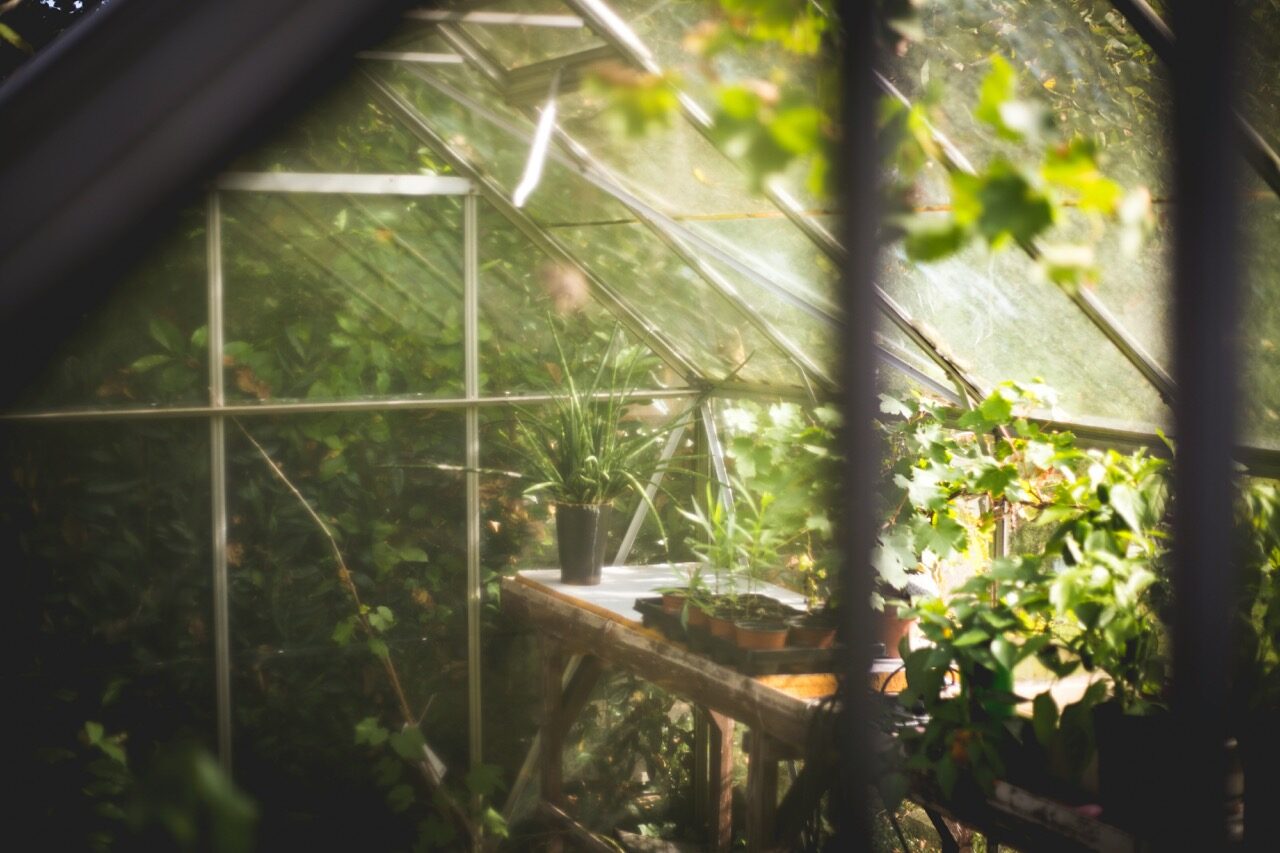
A year-round community greenhouse sits on the data center's fence line. The heat a server hall would vent to the sky — warm, not scorching — is carried next door through a sealed loop and used to grow food all winter long. Real strawberries in January. Steady greenhouse jobs. A benefit a resident can verify from the road, without taking anyone's word for it.
The greenhouse isn't the business — it's the proof. It's the part of the project a town can taste.
Real berries in January, grown on heat the servers threw away.
Zone 2 · The thrifty crew
Turmeric & Ginger
Hardy roots that thrive in steady, low-grade warmth.
Zone 3 · The steady earner
Gourmet Mushrooms
A reliable year-round crop with strong local demand.
Zone 4 · The showstopper
Oranges
In-state citrus — proof that reclaimed warmth changes what a town can grow.
What the harvest actually feeds
How much produce is300,000 lbsa year?
~900 people’s fruit and vegetables. Every. Single. Day.
4,660
servings of fresh fruit & vegetables a day
365 days a year · never a season
The math, in full
The World Health Organization counts a serving of fruit or veg as 80 grams — about a handful, or one medium orange. Five of them (400 g) is a full day. So:
300,000 lb produce / year
÷ 365 days≈ 822 lb / day
822 lb / day≈ 372,816 g / day
÷ 80 g one WHO serving≈ 4,660 servings / day
÷ 5 servings one person’s day≈ 900 people / day
That’s not a truckload passing through on the interstate. It’s ~4,660 servings of real produce a day — the berries in a kid’s lunch, the greens on a dinner plate — grown a few miles away instead of three states over, every single day of the year.
Illustrative design targets for a ~2.5-acre, four-zone flagship greenhouse. Serving size and daily intake per the WHO (80 g per serving; 400 g / five servings recommended daily). 300,000 lb ≈ 136,078 kg ≈ 372,816 g per day across 365 days. Figures vary by site.
The three harvests
Three things a data center wastes. Three we put to work.
A facility's power bill, water draw, and land footprint are exactly what a town fears. The same three resources, reclaimed on site, are what it gets back.
Harvest the heat
Reuses rejected heat.
Low-grade heat — roughly 35–50°C — that would otherwise blow straight up into the sky becomes a year-round growing climate next door. We don't make energy. We catch what's already being thrown away.
Standard heat-exchanger + buffer tank. Two loops, one wall, never mixed.Read more →
Harvest the water
One system, four climates.
Closed-loop irrigation recaptures what the plants don't drink. Net-zero town-water draw in temperate Virginia, net-positive in the desert, a stormwater sink on the coast — committed where the gear is proven, metered everywhere.
Net-positive and stormwater modes are under validation by region.†Read more →
Harvest the soil
A loop that closes.
On-site composting turns greenhouse waste back into living soil — enough to keep the beds self-sustaining, with the surplus going back to the town's own gardens, parks, and schools.
Surplus compost volume is an engineering design target.†Read more →
A data center is coming, or already here. Move the slider to its size, and see what the heat it currently throws away could grow instead — in food, jobs, cleaner air, and warmth put to use. Every number here is a published engineering estimate, scaled honestly. Nothing inflated. You can check all of it.
Data center size100MW
About the size of a typical hyperscale campus — the electricity of roughly 100,000 homes.
600,000lbs of food / year
Strawberries, oranges, mushrooms, turmeric & ginger — grown across town, not trucked across the country. Enough fresh produce for about 1,900 people’s fruit & vegetables, every day of the year.
40local jobs
Year-round and rooted in place — the kind of work a server hall can’t provide.
1,400tons CO² avoided / year
Heat reused instead of burned — about 304 cars taken off the road.
6,000MWh of heat put to use
Warmth that was venting straight into the sky — a sliver of what the campus rejects, the rest unchanged.
Ask in plain language
What would this mean for your town?
Tell us your town and what worries you. We’ll explain — honestly, in plain words, using the numbers above — what a co-located greenhouse would and wouldn’t do for your community.
Generated to be plain and honest, grounded in the estimates above. It won’t promise lower bills — the honest answer is that’s complicated — and it will say where the limits are.
Estimates scale from a ~2.5-acre, four-zone flagship greenhouse (~300,000 lbs, 14–20 year-round jobs, ~700 tons CO², ~3,000 MWh heat reused per year) co-located on the host campus, scaled with the practical greenhouse capacity a site of this size can support and capped at three flagship modules. Reusable-heat basis ~0.75 MWh per MWh of IT load. CO² vs. natural-gas heat at ~0.18 kg/kWh. People-fed equivalent at the WHO-recommended 400 g of fruit & vegetables per day (~322 lbs per person-year); car-equivalent at the EPA average of ~4.6 t CO² per vehicle-year. All figures are engineering design targets, not guarantees — the full basis is in the engineering page and the research brief.
Beyond Greenhouses
Harvesting for a community's future.
The greenhouse is the flagship — a town can taste it, and nothing verifies a benefit so plainly. But the heat is a platform. Where a greenhouse isn't the right first move, the same reclaimed warmth can serve the community in other ways.
Civic
Heat a rec center or pool
Keep a public building or municipal aquatic center warm year-round on heat that was being vented.
District
Warm nearby buildings
The original use of waste heat — piping it to homes and businesses next door, the way district heating has run for decades.
Protein
Raise fish
Warm, controlled water makes aquaculture a natural second crop alongside — or instead of — produce.
Process
Dry crops or lumber
Low-grade heat is ideal for dehydration and kilns — food processing and timber that towns already do, made cheaper.
Resilience
Melt ice on critical roads
The same heat can keep emergency ramps and access roads clear through winter.
Backup
Share the blackout shield
A data center is built to survive an outage. The site beside it can keep growing — or stay warm — when the grid doesn't.
We lead with food because you can taste it. Everything else is on the menu once the heat is flowing.
Why you can trust it
Charm on top, evidence underneath.
A project whose entire pitch is "a benefit you can verify" has to be the first to submit to verification. So we hold ourselves to it: delivered heat and crop output are third-party-metered and publicly reported — on the record, not advertised by us. Every internal projection on this site is marked plainly as a design target (†) until built performance confirms it. A claim you can audit is not greenwashing. A claim you cannot is.
The full account
What reclaimed heat can do for a town.
We wrote the whole account in the open: the mechanism, the proof already running on four continents, the honest limits, and how a greenhouse — or a heated pool, or a warm public building — becomes a lasting community asset. No NDA, no spin.
An HDD and energy operator. The Mid-Atlantic’s tank leader. A founder who tells the story. Three companies meeting at one fence line — with the crews, rigs, and tanks to put a town’s heat to work.
Whether a data center is coming to your community or already there, we'll think it through with you — what the heat could grow, and what it would and wouldn't do for your town. No obligation, no sales pitch.
Built in Lynchburg, Virginia — close to the communities and the build-out this model is built to serve.